
Goals & Challenges
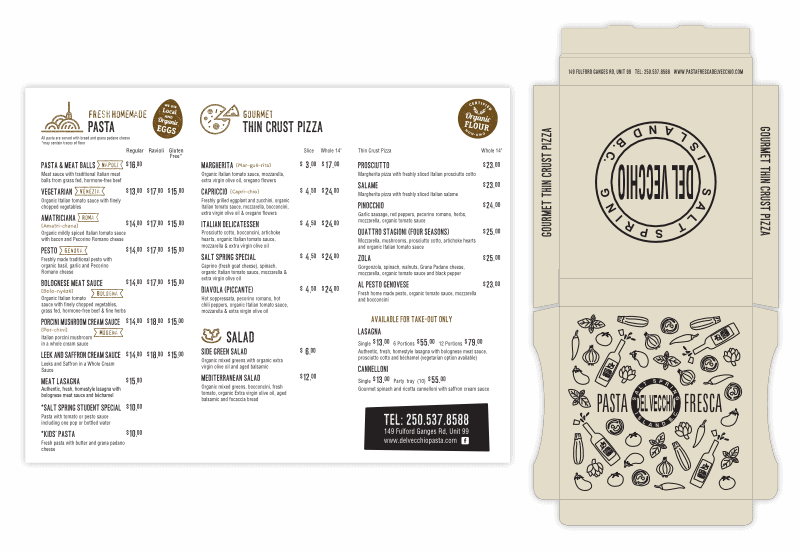
Del Vecchio Pasta Fresca is a casual restaurant located on Salt Spring Island, British Columbia, Canada, specializing in authentic homemade Italian cuisine. The client’s goal was to redesign the menus and other print materials to give them a fresh look and enhance functionality, all while retaining the existing logo to help boost sales.
Resources & Materials
Creating items that incorporate an existing logo can be challenging, especially if the logo isn't easily adaptable to different media. Even when clients recognize that their logo needs an update, they may feel reluctant to proceed due to budget constraints or a desire to maintain familiarity among current customers, who may not want a significant change. However, most of the time, we can still find a way to implement overall improvements.
Approach & Outcome
Our approach for this project was to create a new, consistent look representing the client’s business: serving authentic Italian food in a casual setting. We wanted to highlight the new graphic design while the logo to be low-keyed but presented clearly. Most importantly, making it easy for their customers to understand what they offer.
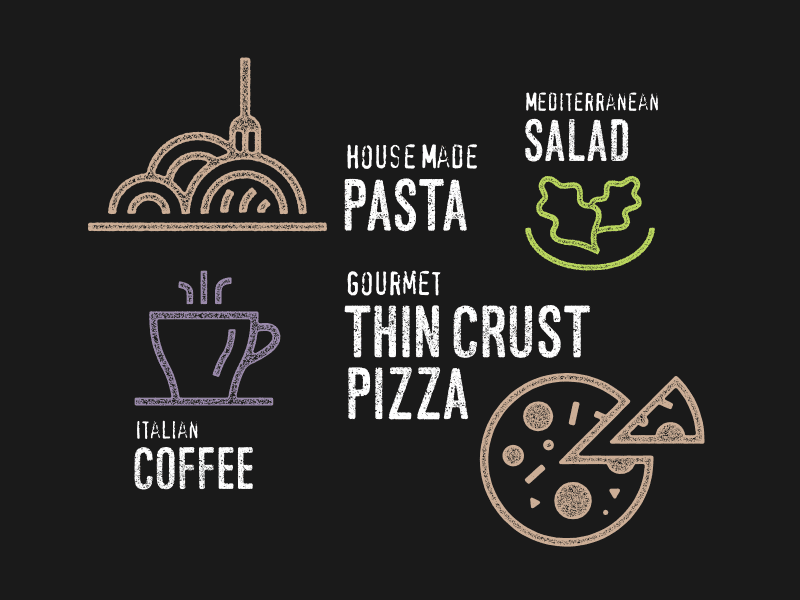
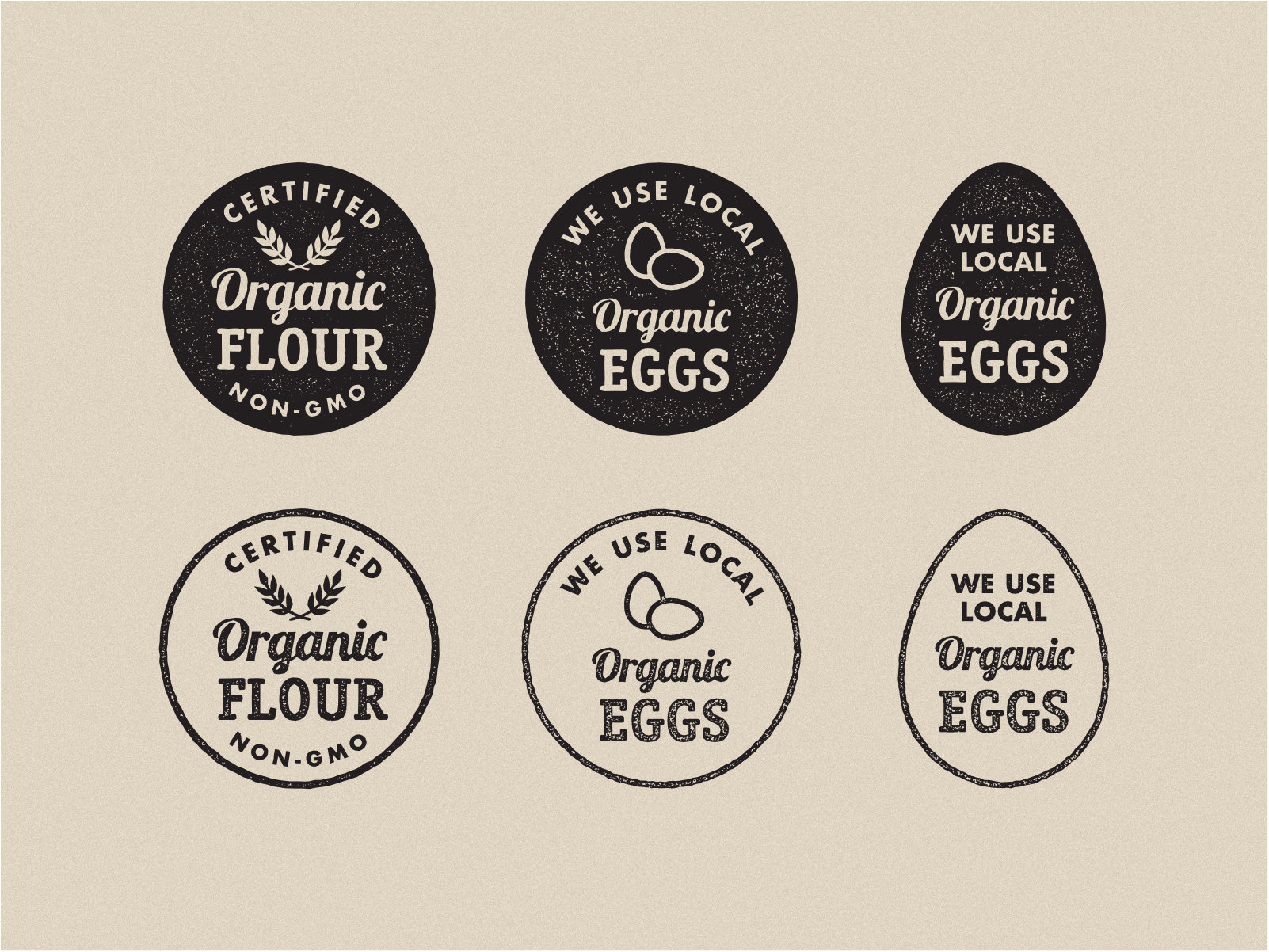
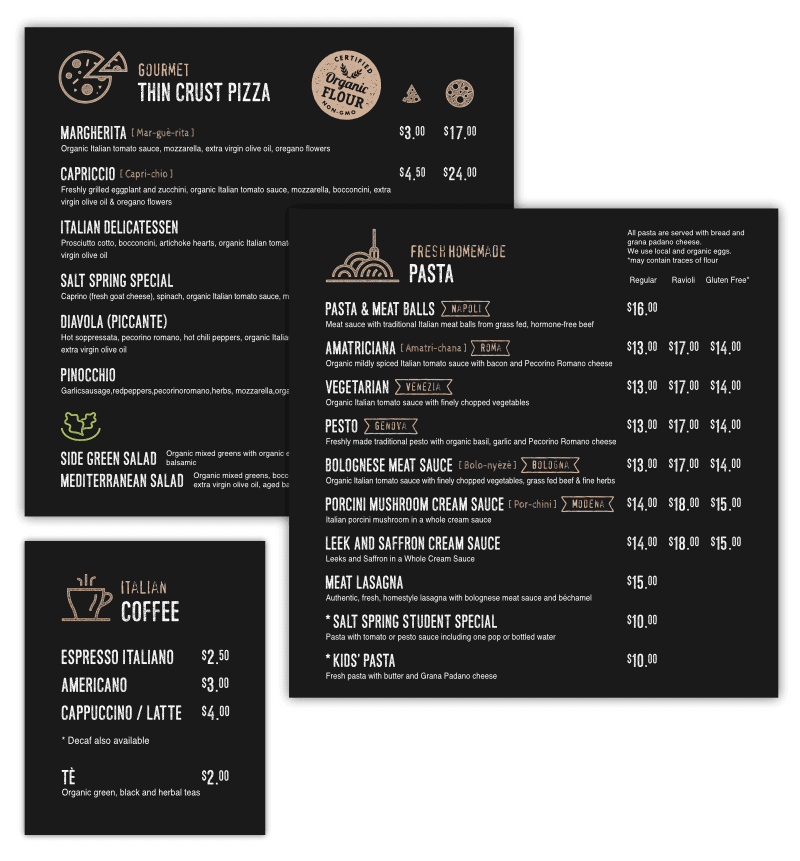
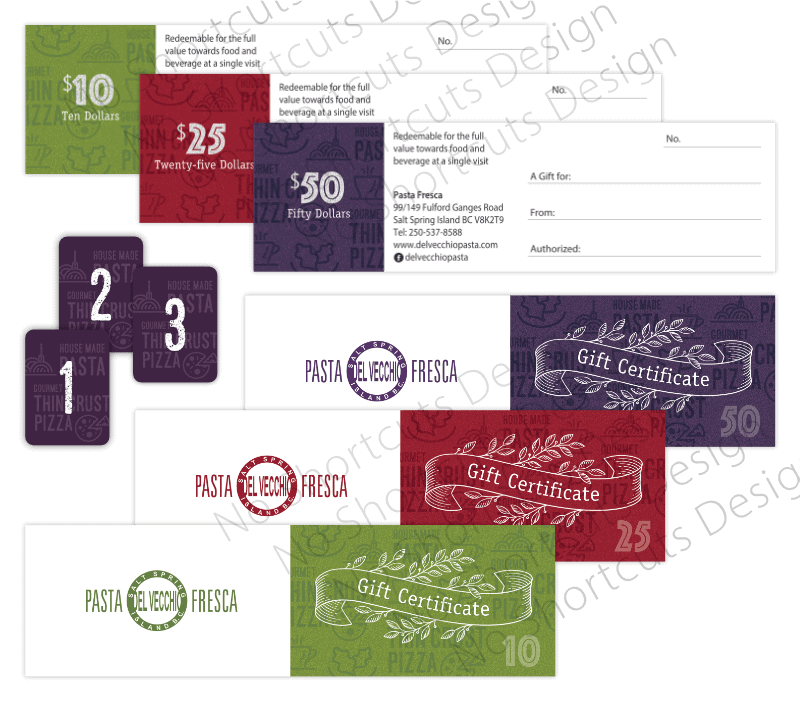
The client also wanted to emphasize the premium local ingredients they use. We designed a set of key graphic elements for the first item: the menu boards. Once these graphic elements were created, we were able to adapt them across various media, achieving a cohesive look throughout the items the client uses daily.
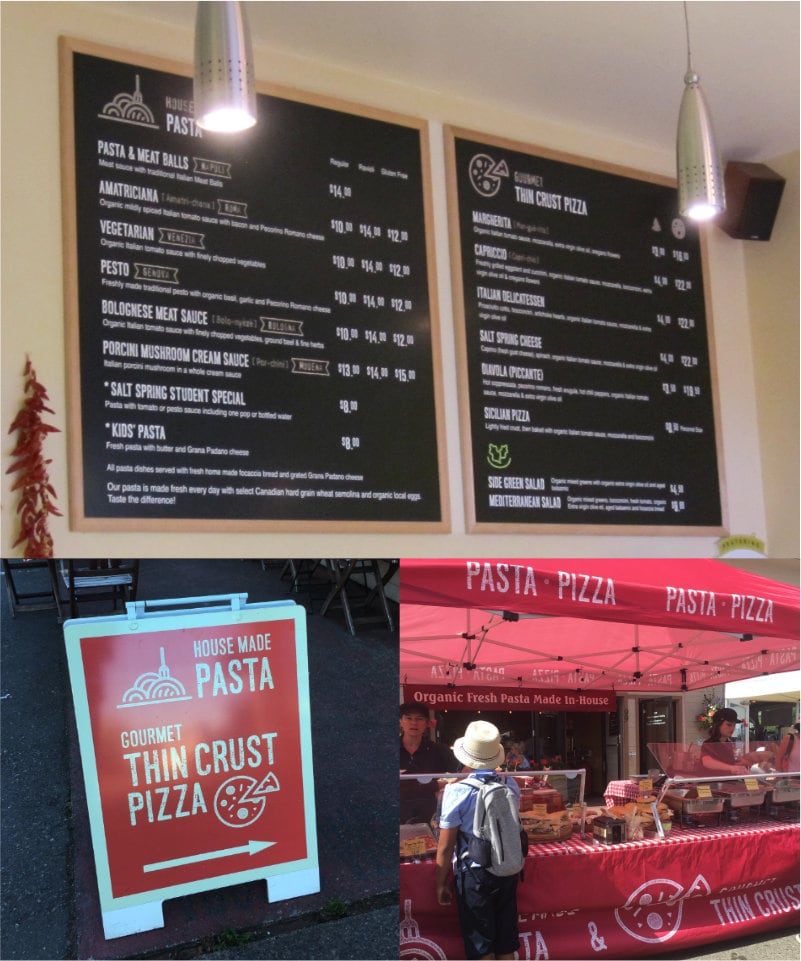
Restaurant front
Applications & Tools
Adobe Illustrator, Adobe Photoshop
On-page SEO is our primary focus. It is a crucial first step to optimizing web pages to improve search engine rankings and earn more relevant traffic. It involves refining elements that web designers, developers, and site administrators have control over during website production. These elements include usability, design, content and page structure, content quality, and performance.
It can be continuously nurtured through periodic maintenance, updates, and the addition of new content with relevant keywords after the site launch. Properly addressing on-page SEO gives you a robust foundation for further competing in digital marketing. This is where we focus.
Another important aspect of SEO is off-page SEO, which is done outside of your website to enhance your website's domain authority through social media marketing, inbound link building, relevant and valuable blog posts, etc. Navigating these without guidance can be challenging for many. This is where a digital marketing specialist comes in. They can assess your current state, provide recommendations, develop a strategic plan, and implement it. Depending on your budget, you can get help as much or as little as you need.
While on-page SEO builds the foundation, off-page SEO takes you further to reach the full potential of your digital marketing efforts. It's not about choosing one over the other — they complement each other to improve your search engine rankings.
📌 Key Elements of On-page SEO and Our Approach
Usability
Every business is unique and has different needs. Sometimes, there can be a gap between what you think will work for your site visitors and what actually makes their experience easier. We integrate your ideas and needs into a functional website that serves both you and your audience.
Design
We design websites as a part of branding. It's also about making things easy for users. We aim to design your website to truly reflect your brand and showcase your business in the best light while ensuring usability.
Content & Page Structure
Your website's content should be organized in a way that makes sense to both search engines (machines) and your audience (humans). To address this, we make sure your website has proper element hierarchy, a clear layout, easy navigation, and is mobile-friendly.
Performance
We optimize your website's speed, implement security measures, and conduct performance tests for a seamless user experience. Additionally, we can help with the initial setup of Google Analytics and Search Console so you can monitor your site's status and results after launch.
Content Quality
While you can begin with your own writing, crafting content that resonates with visitors takes skill. We can connect you with an expert who can create engaging content that naturally incorporates your focus keywords while delivering real value to your readers.
オンページSEO は、ウェブサイトをグーグルなどの検索エンジンで見つけやすくするための大切な第一歩であり、私たちが特に力を入れているポイントです。これは、ウェブデザイナー、開発者、サイト管理者が、ウェブサイト制作中にコントロールできる要素を最適にしていくことです。これらの要素には、ユーザビリティ、デザイン、コンテンツやページ構造、コンテンツの質、パフォーマンスなどがあります。
サイト公開後も、定期的なメンテナンスやアップデート、関連性のあるキーワードを含む新しいコンテンツの追加などによって継続的に育てていくことができます。オンページSEOに適切に対応することで、デジタルマーケティングでさらなる競争力を得るための強い基盤を築くことができます。
SEOのもう一つの重要な側面に、オフページSEO があります。これは、ソーシャルメディアでの発信や、他のサイトからのリンク、質の高いブログ記事の配信など、ウェブサイトの外側で行う活動のことです。これらの活動を通じて、サイトの信頼性を高めていくことができます。
これらの活動を専門的な知識なしで迷わず進めるのは難しいと感じる方も多いでしょう。そこで頼りになるのが、デジタルマーケティングの専門家です。改善のためのアドバイスから、現状分析・戦略立案・実行まで、予算に応じて必要なサポートを選ぶことができます。
つまり、オンページSEO はサイトの土台作り、オフページSEO は、デジタルマーケティング活動の可能性を最大限に引き出すための、外からの支援強化のようなものと考えることができます。二つは互いに補完し合いながら、検索エンジンのランキングを向上させていくわけです。
📌 オンページSEOの重要な要素と私たちのアプローチ
ユーザビリティ
ビジネスにはそれぞれ異なる個性とニーズがあります。その中で、サイトの所有者が「これは良い」と考えることと、実際に訪問者が「使いやすい」と感じられるものとの間にギャップが生じることもあります。私たちは、お客さまのアイデアとニーズを取り入れつつ、ユーザーの視点もにとって価値のある、使いやすく機能的なウェブサイトづくりをお手伝いします。
デザイン
私たちは、ウェブサイトをお客さまのブランドづくりの一環としてデザインしています。見た目の美しさだけでなく、ユーザーにとっての使いやすさも大切な要素です。お客さまの「らしさ」を反映し、ビジネスの魅力を最大限に引き出しながら、ユーザーにとって快適で使いやすいウェブサイトを目指しています。
コンテンツとページ構成
ウェブサイトのコンテンツは、検索エンジン(機械)とユーザー(人間)の両方にとって意味のある形で構成する必要があります。そのために、適切な要素の階層構造、見やすいレイアウト、直感的なナビゲーション、モバイルフレンドリーなウェブサイトを構築します。
パフォーマンス
スムーズなユーザー体験を実現するために、サイトのスピード最適化、セキュリティ対策、パフォーマンステストを実施します。さらに、Google Analytics や Search Console の初期設定をお手伝いすることで、サイト公開後の状況や成果を確認できるようサポートします。
コンテンツの品質
まずはご自身で文章を書き始めることもできますが、ユーザーの心に響くコンテンツをつくるには、やはりちょっとしたコツやスキルが必要です。伝えたいキーワードを自然に盛り込みつつ、ユーザーにとって価値のある内容を届けられるプロのライターをご紹介することも可能です。
Google アナリティクス は、ウェブサイトに訪れたユーザーが「どこから来て」「どんな行動をして」「最終的に何をしたか(コンバージョン)」などを詳しく把握できるツールです。ユーザーの特徴や行動を知ることで、サイトの使いやすさや成果を改善するヒントが得られます。
Google サーチコンソール は、ウェブサイトが Google 検索でどのように表示されているかを分析できるツールです。検索結果での表示順位や、インデックス状況(ページが Google に正しく登録されているか)など、技術的な SEO の問題点などをチェックすることができます。
二つのツールは互いに補完し合い、ウェブサイトのパフォーマンスを総合的に把握することができます。
もっと知りたい...
Google Analytics is a tool to find how users interact with your website, such as traffic sources, user behaviour, and conversions. It helps you understand your audience, improve user experience, and optimize conversions.
Google Search Console reports on how your website performs in Google Search. It provides insights into search rankings, indexing, and technical SEO issues. It helps you monitor and optimize your SEO efforts.
Both tools complement each other to give you a full picture of your website performance.
Dig more...
OGP(オープン・グラフ・プロトコル)は、Facebook、LinkedIn、X などのソーシャルメディアでウェブページが共有された際に表示されるリンクのプレビュー内容をコントロールできる仕組みです。OGP を使用すると、プレビューに表示される画像やタイトル、説明文などの要素を自由に設定できます。適切に設定されたプレビューは、ブランドの一貫性を維持しながら、リンクのクリック率やユーザーの関心の向上にも貢献します。
もっと知りたい...
OGP (Open Graph Protocol) is a metadata standard that helps you manage how web pages appear as link previews on platforms like Facebook, LinkedIn, X and others. When someone shares your link, OGP lets you control the display of images, titles, descriptions, and other elements in the preview. These well-formatted previews enhance user engagement while maintaining brand consistency.
Dig more...
ウェブサイトの目に見えるコンテンツは、HTMLソースコードのタグを使って構成されます。これらのタグは表向きにユーザーには見えませんが、ウェブブラウザにコンテンツの表示方法を指示し、段落や画像などの、さまざまな要素を定義します。
HTMLのセマンティック要素は、コンテンツについてさらに意味を与えるタグです。これらの要素は、単にブラウザにそのセクションが段落であることを伝えるのではなく、追加の情報を提供します。例えば、コンテンツが本文の一部であること、記事内のヘッダーであること、ナビゲーションンであることを示すことができます。セマンティックタグを使うことで、検索エンジンとスクリーンリーダーはページの構造をより正確に理解することができます。
もっと知りたい...
The visible content of a website is organized using tags in its HTML source code. While these tags are not visible to users on the front end, they instruct the web browser on how to display the content. They specify different sections, such as paragraphs, images, and so on.
Semantic elements in HTML are tags that convey meaning about the content within them. These tags provide additional context rather than simply telling the browser that a section is a paragraph. For example, they can indicate that the content is part of the main body of text, a header within an article, or a navigation section. By using semantic tags, search engines and screen readers can better understand the structure of the page.
Dig more...